Satyabhama Majhi and People’s Wall: Bringing Regional Art Traditions to the New Parliament House
The participation of an artist in a major national cultural project can become an important milestone in a creative career. For Odisha-based contemporary artist Satyabhama Majhi, her involvement in “People’s Wall – Jan, Janani and Janmabhumi” represented an opportunity to contribute to a large collaborative artistic initiative associated with India’s New Parliament House.
The project brought together women artists and artisans representing different regions of India. Through its participatory approach, it created a platform where diverse regional artistic traditions could be brought together within a contemporary national setting. Majhi served as a Co-Sutradhar and creative contributor, contributing to the project through her artistic experience and engagement with traditional and contemporary visual practices.
A National Project Built Through Collaboration
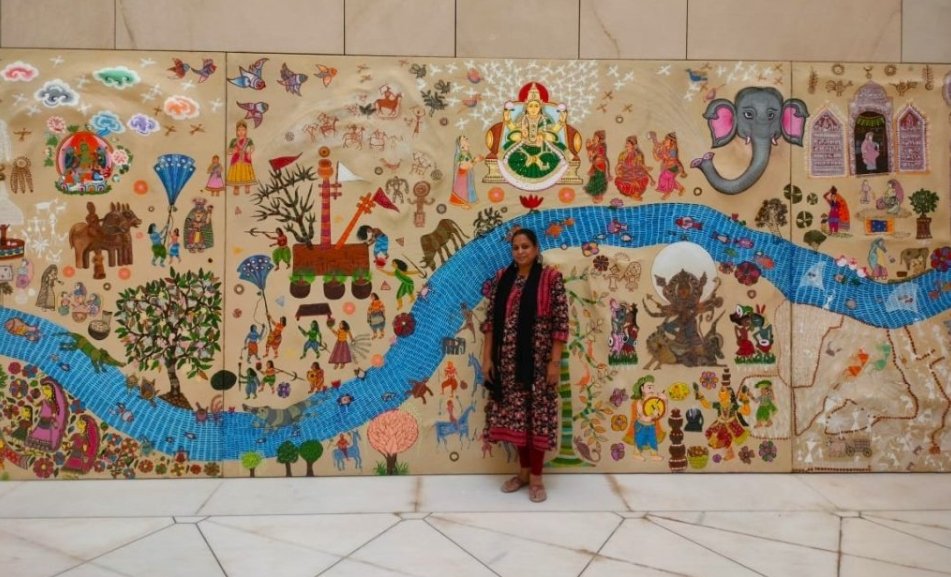
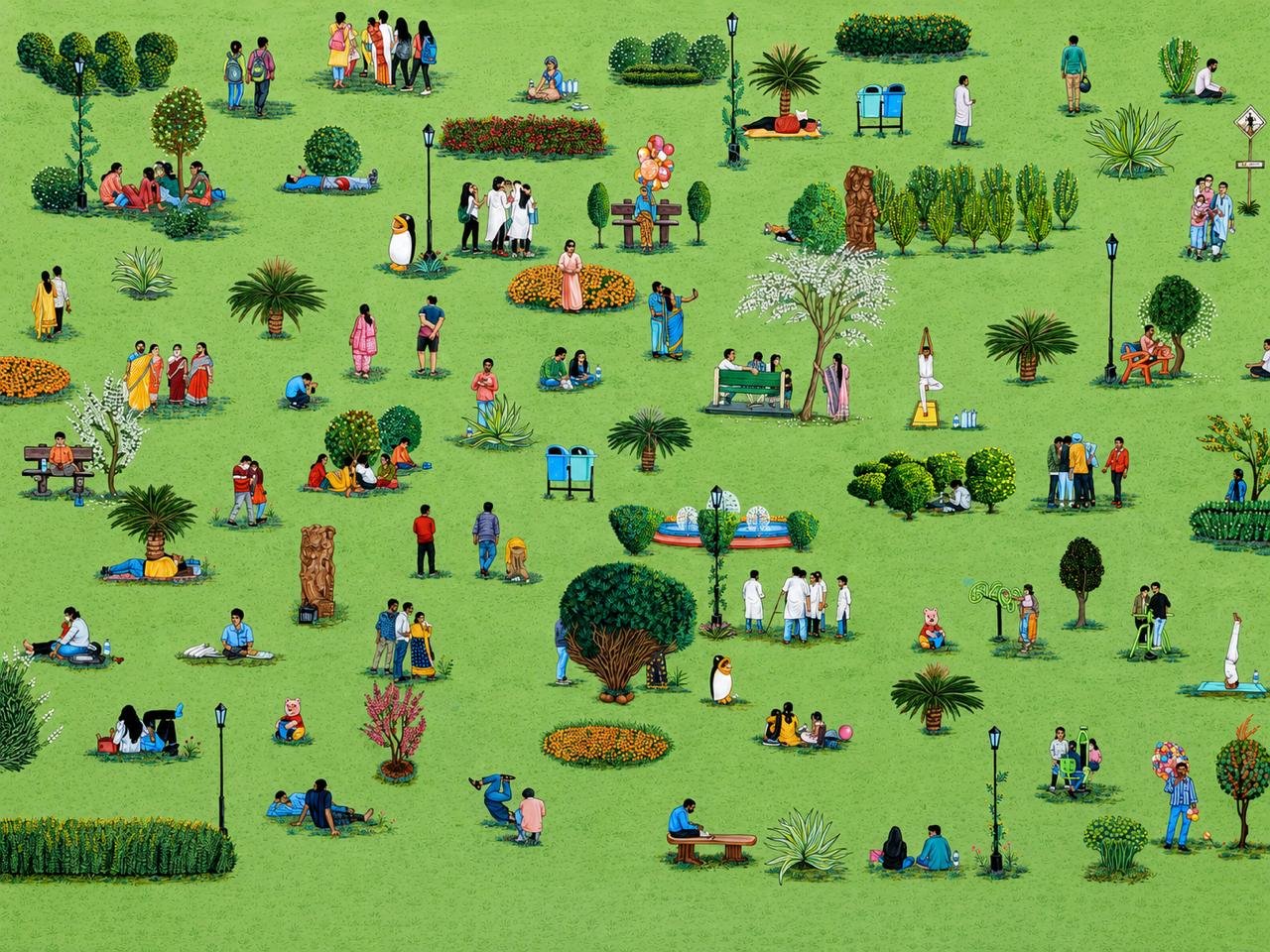
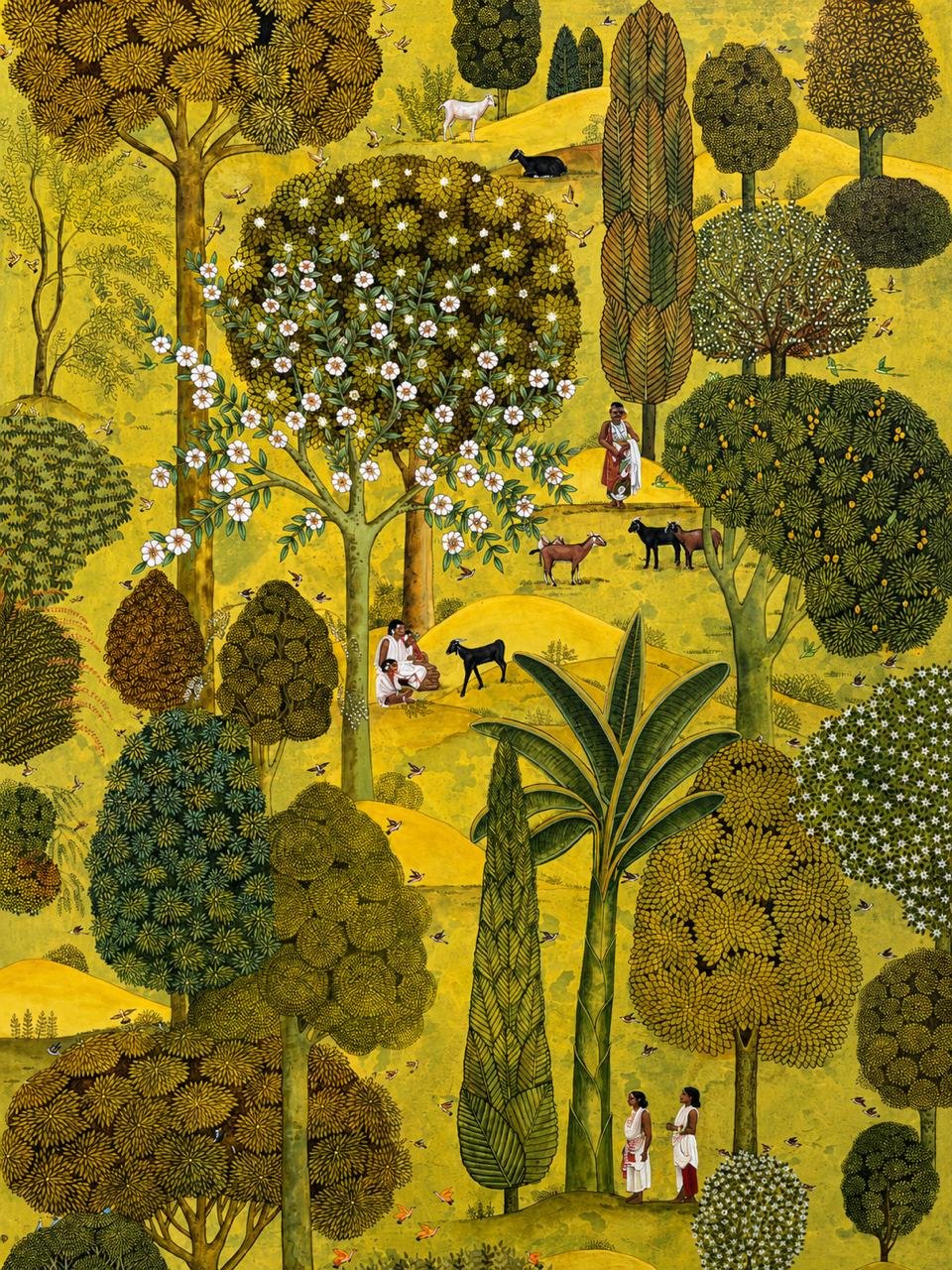
“People’s Wall – Jan, Janani and Janmabhumi” was created in 2023 through an initiative associated with the Lalit Kala Akademi, New Delhi, for the New Parliament House.
The project was significant not simply because of its location, but because of the collaborative process behind it.
Instead of presenting a single artist’s individual vision, the project brought together women artists and artisans from different parts of India. Each participant carried knowledge shaped by a particular region, cultural environment and artistic tradition.
This created an opportunity for India’s cultural diversity to be represented through a collective visual expression.
For Majhi, whose artistic practice has consistently explored community participation and traditional knowledge, such a project offered a natural extension of her wider artistic approach.
The Meaning of “People’s Wall”
The title “People’s Wall” itself suggests an important idea: a wall can become a shared cultural space.
A wall is normally understood as a physical boundary. In an artistic context, however, it can become a surface for storytelling, memory and collective identity.
The project transformed this idea into a large-scale collaborative artistic expression.
The words Jan, Janani and Janmabhumi evoke people, motherhood and the homeland. Together, they provide a conceptual framework for thinking about identity, community and the relationship between individuals and the country.
The project therefore connected artistic expression with broader ideas of belonging and cultural diversity.
Women Artists and Artisans at the Centre
One of the notable features of the project was its participation of women artists and artisans from different parts of India.
Women have historically played an important role in preserving and transmitting many forms of traditional artistic knowledge. Such knowledge can exist within households, villages, craft communities and cultural traditions.
By bringing women practitioners into a major national artistic project, the initiative created visibility for these diverse creative traditions.
For Majhi, this emphasis on participation and cultural knowledge resonated with her own experience of working with communities, artists, artisans and educational groups.
The project demonstrated that traditional artistic knowledge can have a place within major contemporary cultural spaces.
Connecting Regional Traditions
India’s artistic identity is not represented by a single visual style. Different regions have developed their own artistic languages, materials, motifs and methods over generations.
A collaborative project involving practitioners from different parts of the country can therefore become a visual meeting point for these traditions.
Majhi’s own artistic background in Odisha brought another regional perspective into the project.
Her practice has been influenced by Odisha’s cultural environment, indigenous knowledge systems, natural landscapes and traditional artistic practices. Her involvement helped connect this regional experience with a wider national artistic framework.
The result was not simply a collection of separate regional expressions. Collaboration allowed different traditions to exist within a shared artistic environment.
The Role of the Co-Sutradhar
Majhi’s role as a Co-Sutradhar is particularly relevant to understanding the collaborative character of the project.
The word “Sutradhar” carries the idea of a person who helps connect different elements of a larger narrative. In a collaborative art project, such a role involves more than individual artistic production.
It can include coordination, creative exchange, participation and helping different artistic voices work within a common framework.
This role complements Majhi’s broader identity as an artist, curator and community art practitioner.
Her career has repeatedly involved working between different groups and artistic environments. Her experience with artists, artisans, children and communities provided a foundation for contributing to a project based on collective creativity.
Traditional Knowledge in a Contemporary National Space
The project also raises an important question about the place of traditional knowledge in contemporary India.
Traditional art is sometimes presented as something belonging exclusively to the past. However, projects such as “People’s Wall” demonstrate that traditional visual knowledge can continue to participate in contemporary cultural spaces.
The inclusion of regional artistic traditions within a major national architectural setting creates a dialogue between heritage and modernity.
This is closely connected with Majhi’s own artistic practice.
Her M.F.A. in Traditional Art provided an academic foundation, while her professional work has expanded into contemporary painting, installation, public art, photography, mixed media and community-based practice.
Her career demonstrates that traditional knowledge can become a starting point for experimentation rather than a limitation.
From Community Experience to National Representation
Majhi’s involvement in the project can also be understood in relation to her long-term community engagement.
Her work with the Dongaria Kondh community, rural groups, children, schools and urban communities has exposed her to different forms of cultural knowledge and everyday experience.
Such experiences encourage an understanding of art as something connected with people.
“People’s Wall” extended this principle to a national level.
Instead of focusing on one local community, the project created a collective platform involving participants from different regions. In this sense, the project expanded the scale of community-based artistic thinking.
The wall became a meeting point for diverse cultural experiences.
The Relationship Between Individual and Collective Creativity
Contemporary art is often associated with the individual artist and personal expression. Collaborative projects introduce another model in which artistic meaning develops through interaction.
For Majhi, this distinction is significant.
Her multidisciplinary practice includes individual artworks as well as public and community projects. Working collectively requires an artist to negotiate between personal artistic ideas and the requirements of a shared creative process.
This can create a different kind of artistic experience.
The final work becomes a record not only of what one artist imagined, but also of the interactions, contributions and cultural perspectives of many participants.
A Symbol of Cultural Diversity
The location of the project gives its collaborative character additional significance.
The New Parliament House represents one of India’s most important contemporary national institutions. Presenting diverse artistic traditions within such a setting creates a connection between cultural expression and national identity.
The project demonstrates that national identity can be represented through diversity rather than uniformity.
Different regional traditions can contribute to a shared cultural narrative while retaining their individual histories and identities.
Majhi’s participation placed her artistic experience from Odisha within this broader framework.
Continuing the Dialogue Between Tradition and Modernity
“People’s Wall – Jan, Janani and Janmabhumi” also reflects a recurring question in Majhi’s career: how can traditional knowledge remain meaningful in contemporary life?
Her work does not treat tradition simply as something to reproduce unchanged. Instead, she explores traditional visual language, natural materials, indigenous knowledge and cultural memory through contemporary artistic approaches.
The People’s Wall project provided another environment for this dialogue.
Traditional artistic practices could enter a modern national architectural setting without losing their connection to the communities and regions from which they originated.
A Significant Chapter in Majhi’s Career
For Satyabhama Majhi, participation in the People’s Wall project represents an important chapter in a career that has moved across regional, national and community-based artistic platforms.
Her involvement brought together several aspects of her practice: contemporary art, traditional knowledge, collaboration, cultural diversity and public engagement.
The project also reflects the broader direction of her artistic journey. Whether working on a painting, a public mural, a community initiative or a national collaborative project, her practice repeatedly explores connections between people, culture and place.
Conclusion
Satyabhama Majhi’s contribution to “People’s Wall – Jan, Janani and Janmabhumi” illustrates the expanding role of contemporary artists in representing and connecting India’s diverse cultural traditions.
As a Co-Sutradhar and creative contributor, Majhi participated in a collaborative project that brought women artists and artisans from different regions into a shared national artistic environment.
The project demonstrated that walls can become more than architectural structures. They can become spaces for memory, identity, participation and cultural dialogue.
For Majhi, the People’s Wall project represents a natural continuation of an artistic journey rooted in traditional knowledge but open to contemporary forms and collaborative possibilities.
Its larger significance lies in the idea that India’s artistic identity can be strengthened when different regional voices are brought together. Through projects of this kind, traditional knowledge can remain visible, active and relevant within the cultural landscape of contemporary India.