
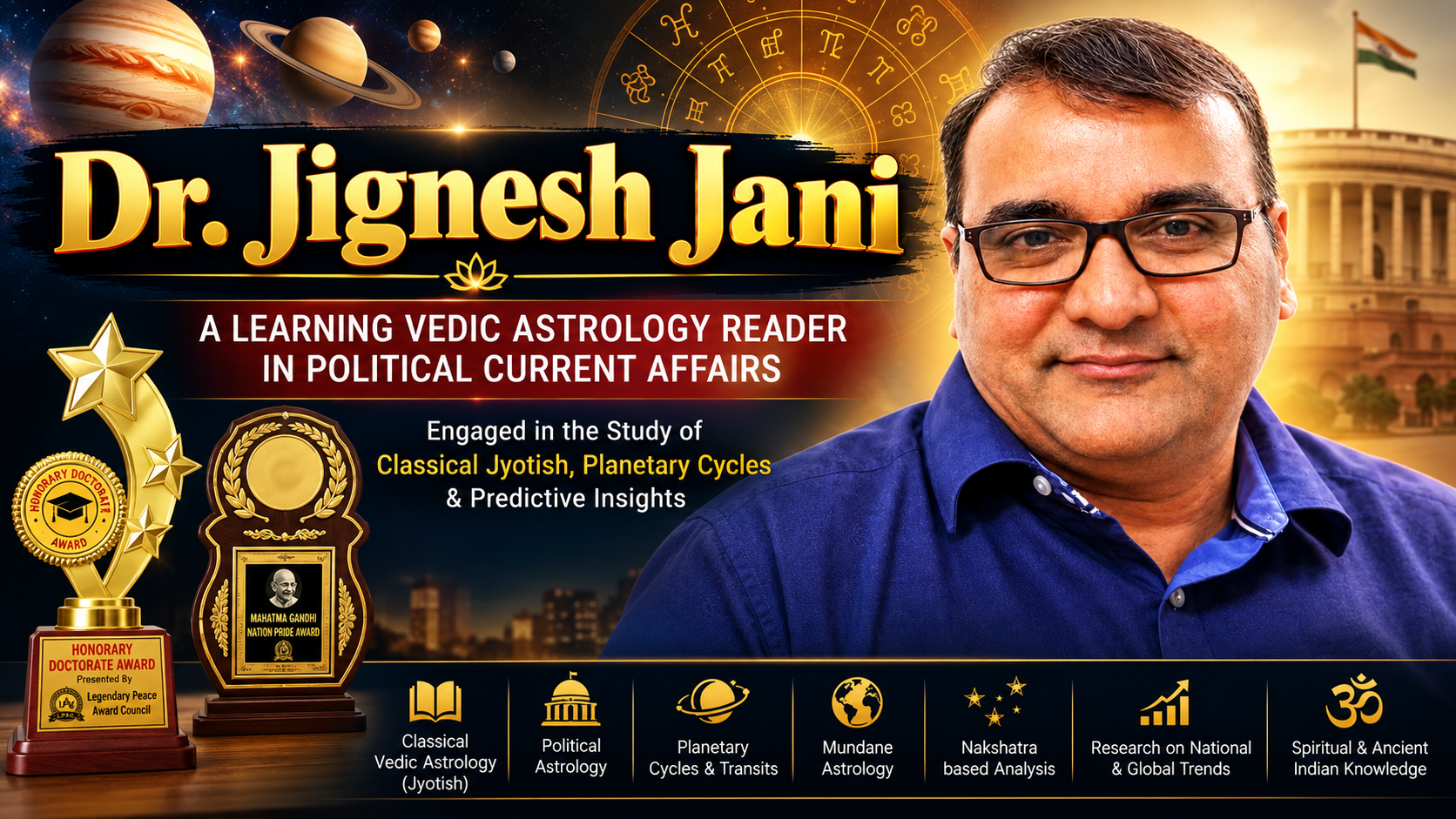
Jignesh Jani Discusses How Vedic Astrology Interprets Today’s Geopolitical Climate
Ahmedabad | July 10, 2026: Vedic astrology researcher Jignesh Jani has shared his views on how traditional Jyotish interprets the current geopolitical climate, emphasizing that planetary alignments should be understood as symbolic indicators rather than scientific predictions. According to Jani, many astrologers believe the present celestial patterns represent a period of significant global change, increasing diplomatic activity, and evolving international relationships.
Jani explained that the current Mars–Rahu conjunction, commonly referred to in Vedic astrology as Angarak Yoga, is traditionally associated with heightened energy, strategic decision-making, military preparedness, and intense political developments. While these symbolic associations have been discussed in classical astrology for centuries, he stressed that they should not be interpreted as forecasts of specific events.
He also highlighted the Saturn–Neptune alignment, which many astrologers interpret as representing institutional transformation, economic restructuring, ideological shifts, and changing global alliances. According to Jani, these planetary combinations encourage reflection on the challenges and opportunities facing governments, policymakers, and international organizations.
Speaking about Jupiter’s influence, Jani noted that the planet is regarded in Vedic astrology as a symbol of wisdom, justice, ethics, and diplomacy. Many practitioners believe Jupiter encourages balanced leadership, meaningful dialogue, and peaceful conflict resolution during periods of uncertainty.
Jani observed that today’s geopolitical environment includes economic volatility, strategic realignments among nations, technological competition, and increasing diplomatic engagement. He believes these developments can be viewed symbolically through traditional astrological principles while acknowledging that real-world outcomes depend on human decisions.
“Vedic astrology provides a cultural and philosophical framework for understanding broader cycles,” Jani said. “It is not a scientifically validated method for predicting wars, political decisions, or international conflicts. The future will always be shaped by responsible leadership, diplomacy, and cooperation among nations.”
Jani concluded by encouraging readers to appreciate astrology as part of India’s rich traditional knowledge while relying on evidence-based information for understanding global affairs. He also expressed hope that international dialogue, mutual respect, and peaceful negotiations will continue to guide world leaders in addressing future challenges.